


A NEW WAY TO LOOK AT SHAME
Shame: The Game is a card deck for looking at shame through image, metaphor and story. It won't make shame disappear. It gives you a way to see it, name it, and talk about it, which is harder to do when it has no shape.
The deck has three kinds of cards. Shame cards picture the forms shame takes. Worth cards picture the strengths you already carry. Activation cards picture the moments that set shame off. Together they let you lay out your own experience on the table, at a little distance, where you can look at it.
Play alone with a journal, with someone you trust, in a group, or alongside a therapist or coach. You choose how deep to go.

THE CARDS
-

SHAME CARDS
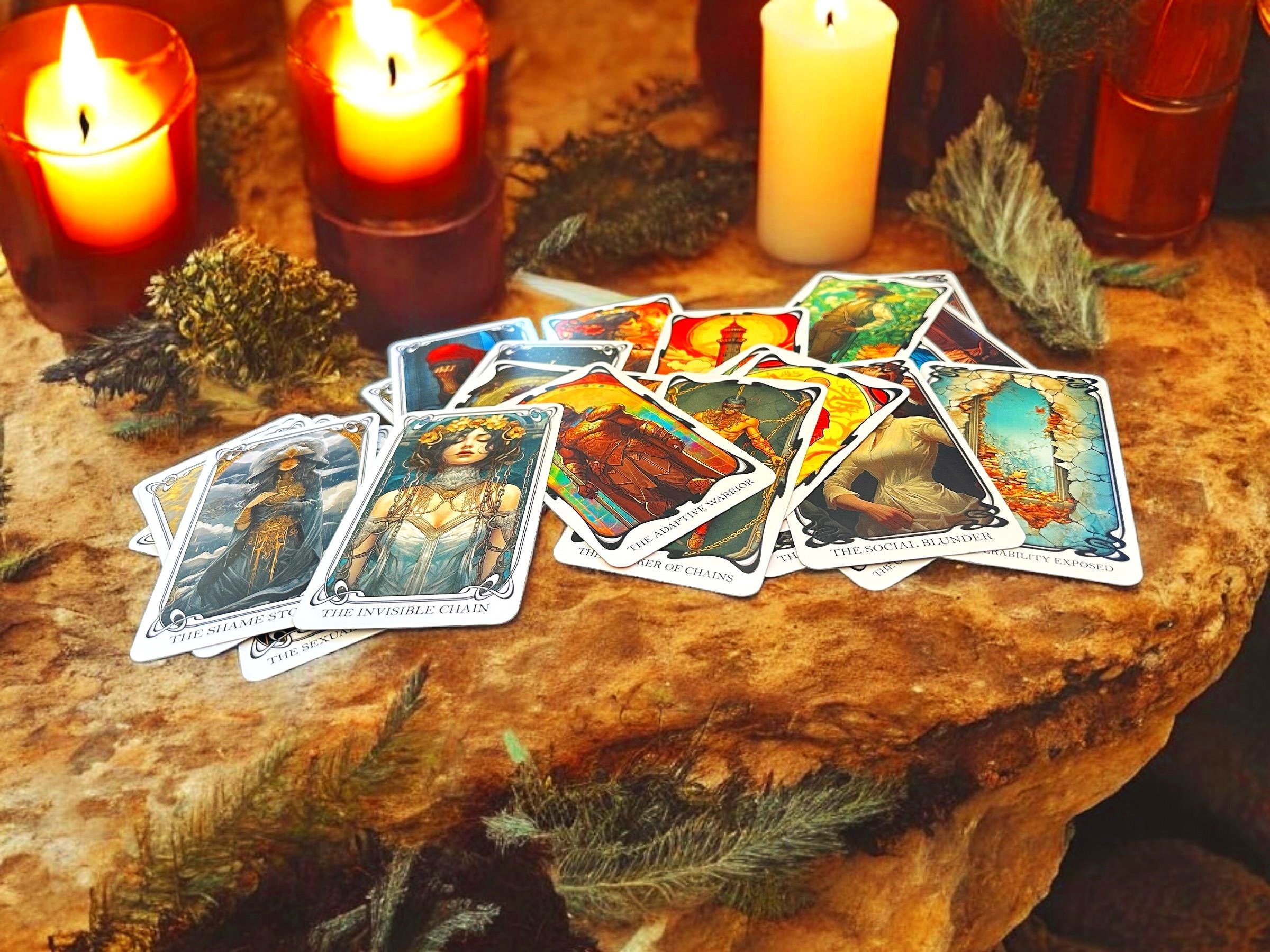
Each Shame card gives one form of shame a picture and a name, from The Shame Octopus to The Caregiver's Cloak. Seeing shame as an image outside yourself makes it easier to look at and easier to put into words.
-

WORTH CARDS
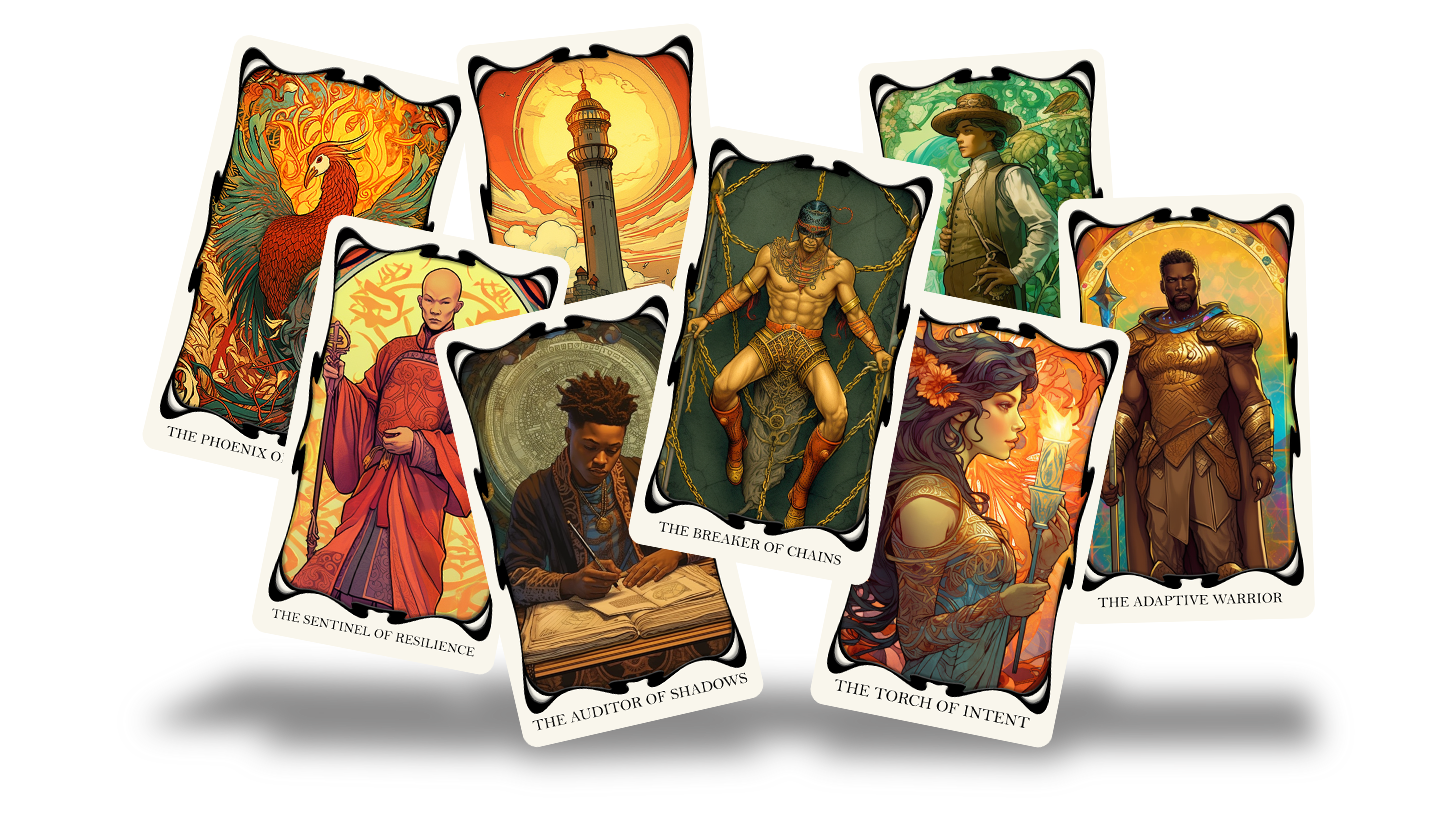
Each Worth card pictures a strength or quality you already carry, from The Auditor of Shadows to The Adaptive Warrior. They aren't rewards for getting past shame. They're a reminder of what's already there while you look at the hard parts.
-
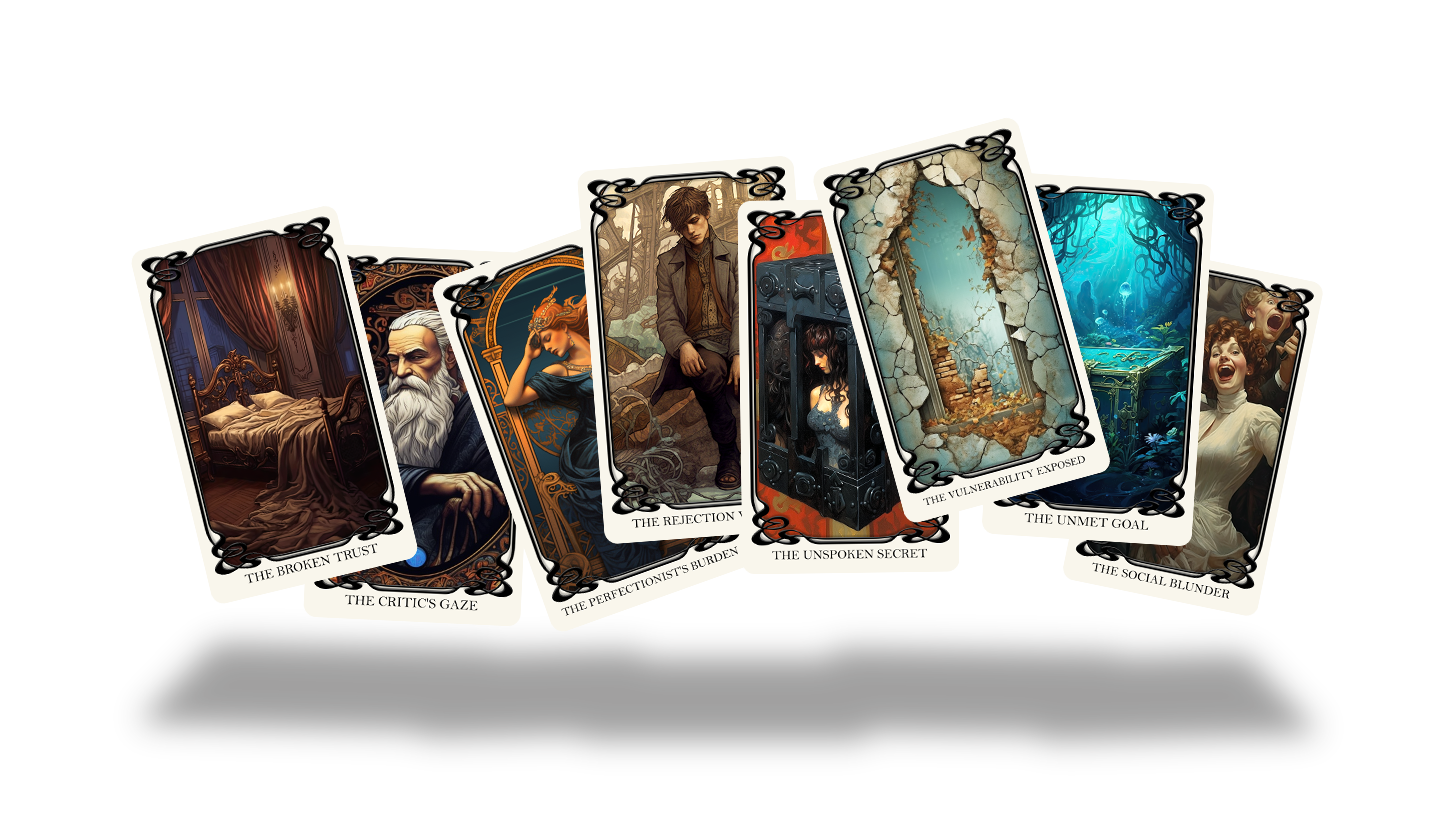
ACTIVATION CARDS
Each Activation card pictures a real-life moment that can set shame off, often called a trigger, from The Critic's Gaze to The Rejection Wound. Naming the moment helps you notice the pattern: what tends to happen, and what tends to follow.
HOW TO PLAY
The idea is simple: look at shame alongside what's already strong in you, and see what story the cards tell together.
Take a breath and settle in. Then choose four cards:
One Worth card that feels true to you. This is what you bring to the table.
Two Shame cards that picture something you carry.
One Activation card for a moment that tends to set that shame off.
Lay them out in the guided matrix and look at them together. What do you notice? Where does the story start, and where might it go?
Then put it into words, in whatever way suits you: write in a journal, say it out loud, or share it with someone you trust. You don't have to finish anything. Some readings land in a minute. Some you'll come back to.
Shame tends to grow in silence and secrecy. Shame: The Game is one way to bring it into the room, on your terms, at your pace.
Prefer to let the deck decide? The Solo, Two Player and Group ways to play below use a draw from the combined deck.

WHO CAN PLAY?
However you play, the setting matters most. Shame eases when it meets empathy, and tightens when it meets judgment. Choose a space, and people, where honesty feels safe.
-
Go at your own pace. One card is enough for a sitting. There's no score and no finish line.
You can always pass. Skip a card, put it back, or choose another. Nothing has to be shared.
You can stop anytime. If a card stirs up more than you expected, set it down. Take a walk, drink some water, talk to someone.
It's not a test. There are no right answers, and the cards don't diagnose anything. They're prompts, not verdicts.
It isn't therapy. If you're carrying something heavy, a licensed professional can help in ways a card game can't.
If you're struggling, the 988 Suicide & Crisis Lifeline is free, confidential and open 24/7. Call or text 988, or chat at 988lifeline.org. If you or someone else is in immediate danger, call 911.
-
Find a quiet, comfortable space. Shuffle the Shame and Activation cards together into one deck, and keep the Worth deck separate. Draw one Worth card and three from the combined deck. Ask what the Worth card might offer the others. Write down what comes up, noticing what you feel as well as what you think. If it gets heavy, stop and come back another day.
-
In a private, comfortable setting, each player draws one Worth card and three from the combined Shame and Activation deck. Take turns sharing your story or reflections while the other listens. Listen without fixing, advising or comparing. Either of you can pass at any point. Agree before you start that what's said stays between you.
-
If you work with a therapist, counselor or coach, you can bring the deck into a session. A trained professional can help you explore what the cards bring up and set the pace for going deeper. The game is a prompt for that conversation. The care comes from the professional, not the cards.
-
Sit in a circle and agree on a few ground rules first: what's shared stays in the room, anyone can pass, and no one gives advice unless asked. Each player draws one Worth card and three from the combined Shame and Activation deck. Take turns sharing as much or as little as feels right. Listen more than you speak, and let each person finish.

EXPANDED GUIDEBOOK
The new edition of the deck comes with a full-color guidebook. It walks through each card in detail: the image, the symbols inside it, and the metaphor behind its name. Use it to go deeper into a card, or to find a starting question when you're not sure where to begin.

GET SHAME: THE GAME NOW

WHAT INFORMS THE GAME
Shame: The Game grew out of lived experience, and it draws on ideas from decades of research on shame. Here's what shaped it, and what the research does and doesn't say.
Shame is about the self; guilt is about an action. Psychologist June Tangney's research draws this line: guilt says "I did something bad," shame says "I am bad." A large review of studies found shame more closely tied to depression than guilt is. That's why the deck pictures shame as something you carry, not something you are.
Naming shame matters. Brené Brown's research on shame resilience, built from interviews with women, describes recognizing shame and speaking it to someone who responds with empathy. The game is built to help with the first steps: recognizing it and finding words.
Putting feelings into words. Lab studies by Matthew Lieberman and colleagues suggest that naming an emotion can soften its intensity in the moment. Each card gives a feeling a name to start from.
Images as a way in. Researchers use a method called photo-elicitation, where pictures prompt people to talk about their experience. The cards use art and metaphor the same way: as a door, not a diagnosis.
Worth alongside shame. Studies of self-compassion practices have found reductions in self-criticism. The Worth cards keep your strengths on the table while you look at the hard parts.
What the research doesn't show
No study has tested Shame: The Game itself. Writing about difficult experiences helps some people, but in studies the effects tend to be small. And growth after hard experiences is possible, not required. You don't owe anyone a comeback story.
The game borrows ideas found in narrative approaches, such as seeing a problem as separate from who you are. It isn't therapy, and it isn't a substitute for it.

GET SHAME: THE GAME NOW
Disclaimer and Limitation of Liability:
Shame: The Game ("the Game") is a self-reflection tool. It is not therapy, counseling, or medical or mental health care, and it does not diagnose, treat or prevent any condition. It is not a substitute for advice from a licensed professional. If you have concerns about your mental health, please talk with a qualified provider.
The Game is designed to support self-exploration and conversation, but it does not guarantee any particular result. The creators, publishers and distributors of the Game ("the Creators") make no representations or warranties, express or implied, about its effectiveness or suitability for any person or circumstance. You use the Game at your own discretion, and you are responsible for decisions you make about your own wellbeing.
